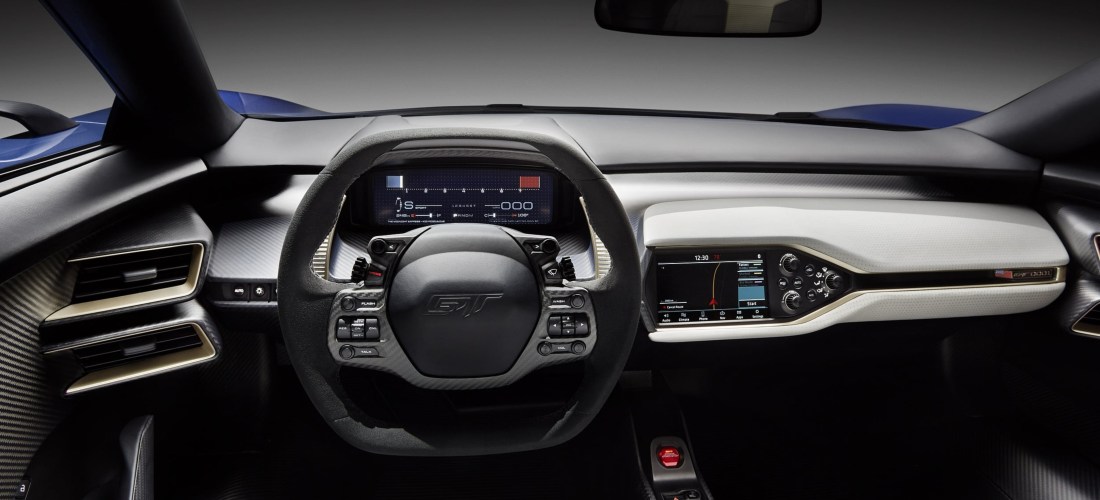
This section describes a few noteworthy projects that I was tasked to lead.
Lincoln Continental Head Up Display and Instrument Cluster
For the renaissance of the venerable Lincoln Continental, I led the functional design and development of the UX for the Head Up Display (HUD) – a first at Ford Motor Company, along with the first fully digital Instrument Cluster. I was responsible to create a structure, skeleton and interaction model for the driver’s interactions with the HUD and the cluster from the steering wheel. I worked very closely with the engineers developing the technology supporting the components and with the designers, who would ultimately develop how to express the content to the customer in warmer, more human and serene terms as the first expression of Lincoln’s Quiet Luxury ethos.
We started with two separate research efforts into better understanding how a HUD and fully digital cluster could work together to best support the goals of the luxury customer. We dug deep into those areas where the two separate studies overlapped and developed a framework to keep the driver Informed and Safe, while leveraging the DLP technology to produce an imminently visible HUD, such that we could minimize the amount of redundancy between the HUD and cluster.

I adapted the structure and interaction model of the 10.1” cluster for the Continental to the mainstream 12.4” cluster format to be used in most Ford Motor Company nameplates even to this day.
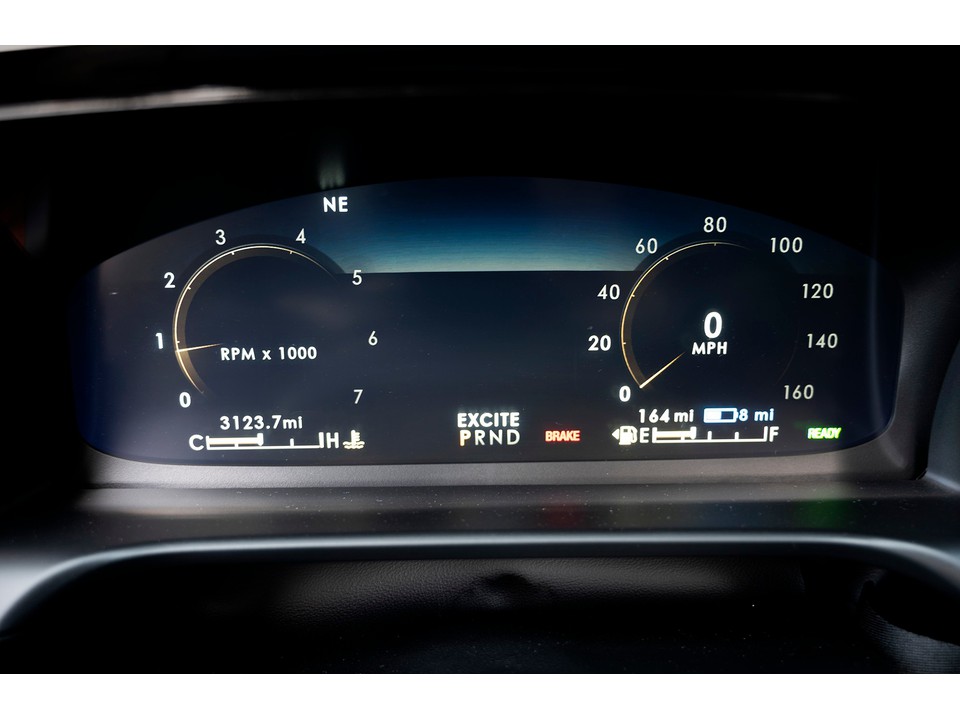
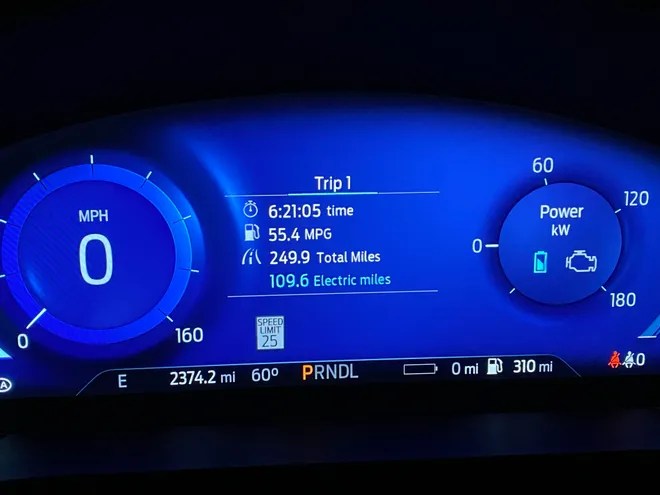
Instrument Clusters for MY 2020+ Electrified Variants of Ford Explorer and Escape and Lincoln Aviator and Corsair
As the recognized Subject Matter Expert for Electrified Vehicle UI / UX, I led the functional design and development of the Instrument Cluster UX for the electrified versions (hybrid and plug-in hybrid) of the Ford Explorer, Ford Escape, Lincoln Aviator and Lincoln Corsair. This required tailoring the base content to support the different messaging of how each brand wanted to leverage electrification in their powertrains: efficiency for Ford and effortless power for Lincoln. It also required tailoring the content across two hardware configurations for instrument clusters: fully digital and mechanical dials, plus a display.
The Ford GT Instrument Cluster
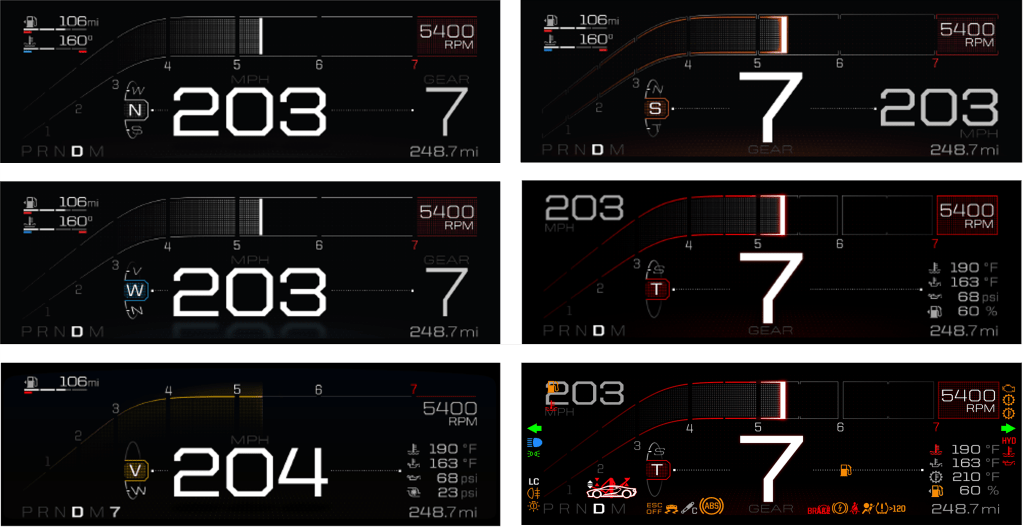
I was brought to the Ford GT team to help them realize the “fit for purpose” vision for their instrument cluster concept, developed with Perception Design. There would want to be a seamless movement of content to best support the functional needs of the different drive modes: optimizing the information content and hierarchy for driving a hypercar ‘on track’ compared to ‘on road’ – or in support of a ‘max velocity’ run. Additionally, the GT team wanted to develop a bespoke GT ‘super-telltale’ to avoid a small, generic vehicle shape that would minimize the glory of the GT silhouette. I developed the structure and interaction model to logically manage the functional safety requirements, as well as the conceptual desires, while still feeling intuitive to the driver and supporting an innate confidence and feeling of being in control.
 Confident UX